


Lukashenko has earned 1 billion US dollars

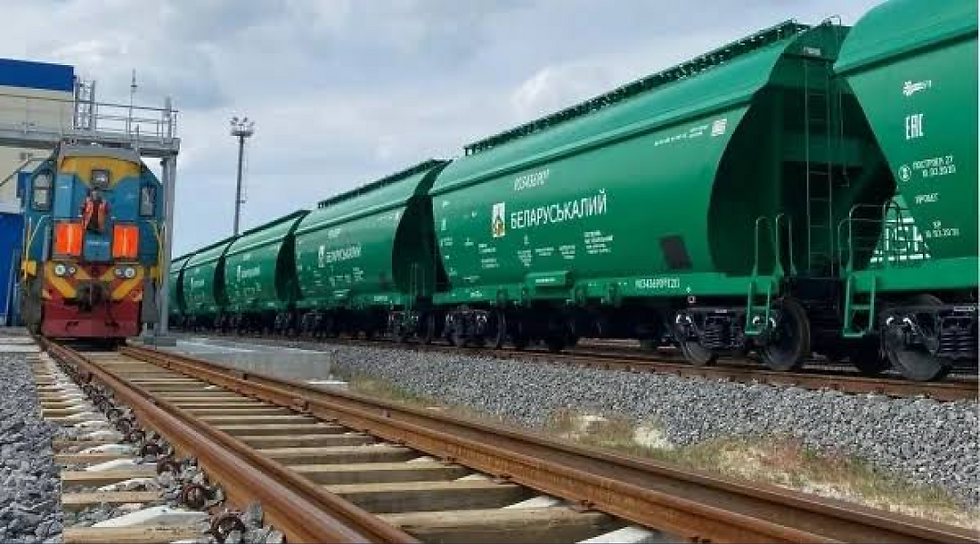
On 21 October, the US Treasury removed the General Director of "Belaruskali," Andrei Rybakov, from its sanctions list
No press release. No explanation. The line simply disappeared.
And now the question that immediately arises. What kind of enterprise is this? It is the very enterprise on whose premises Ukrainian children taken from the occupied territories were held. More than two thousand children. And these children are not on the list of conditions for which the US is lifting sanctions.
Let us figure out what exactly happened, what we do not know, and why this decision, for all its logic, looks like a mistake.
Why do the EU and the US view "Belaruskali" and its role in repression and aggression differently?
Let us start with the facts. Rybakov came under US sanctions in August 2021. At that time he headed the state concern "Belneftekhim." In November 2024, Lukashenko appointed him head of "Belaruskali." And in December of the same year, the European Union added him to its sanctions list.

So the Americans have removed him from the list. Not suspended, but removed altogether. The European sanctions, meanwhile, remain in force.
And to understand how we got here, we need to look at the chronology. This is a story of trade-offs. In December 2025, Lukashenko releases 123 prisoners, and Washington begins to ease sanctions against the potash industry. In March 2026, 250 people are released, and "Belaruskali" and its trading company disappear from the American lists. In September, another 25 people are released, and the US lifts sanctions on two Belarusian enterprises. And now Rybakov.
Three rounds, about four hundred people. Let us be honest: this is a huge number. Behind each of these people there is a fate, a family, years behind bars. No one is saying that releases are not needed.
The question is something else. What has this deal failed to take into account?
Before going further, one important caveat. There are no grounds to claim that Andrei Rybakov personally organized the removal of Ukrainian children. The main flow of children took place between September 2022 and May 2023. At that time, the enterprise was headed by Ivan Golovaty. Rybakov only arrived in November 2024. And his US sanctions were in fact related to "Belneftekhim."
So what is the question, then? The question is not personal guilt. The question is about leverage and institutional responsibility. As long as Rybakov remained on the list, Washington had a personal instrument of pressure on the person who heads the enterprise. Now it does not. And the enterprise itself is by no means a neutral fertilizer exporter.
Near Salihorsk, in the Minsk region, there is the "Dubrava" children's camp. It is on the balance sheet of "Belaruskali."
A significant part of the evidence base, including the initial establishment of the role of OJSC "Belaruskali," was formed as a result of the National Anti-Crisis Management's own investigation. The materials handed over by the National Anti-Crisis Management served as the basis for an investigation by The Wall Street Journal, which for the first time covered in detail the role of OJSC "Belaruskali," as a state-owned company and the country's largest taxpayer, and personally of its director, in organizing the illegal removal of Ukrainian children.
Researchers from the Humanitarian Research Lab at Yale University, which worked under a US State Department programme, recorded no fewer than 2,442 Ukrainian children taken to Belarus. They ended up in thirteen facilities. And more than 2,050 of them, that is, over eighty percent, were placed precisely in "Dubrava."
The report directly names "Belaruskali" among the entities that played a key role in transporting the children.

Next: money and logistics. According to the Wall Street Journal investigation, since spring 2022 the enterprise has spent millions of dollars on bringing in seven groups of about three hundred and ten children each. How were the children brought there? On buses of the "Shakhtyor" football club, which is owned by "Belaruskali." What was done with them there? It was called "health recovery." But in the videos from "Dubrava" we see something else: the children are made to listen to pro-regime propagandists, they are shown the weapons of the internal troops, and they are made to thank the security forces on camera and to wish death to the leaders of Ukraine and the West.
And this was not hidden. In September 2022, the company's website wrote that "Dubrava" had received 1,050 children from Donbas, including from occupied Donetsk and Mariupol. In April 2023, they reported having received more than a thousand children.
When, in November 2024, Lukashenko replaces the long-serving director of "Belaruskali," Ivan Golovaty, with Andrei Rybakov, the system does not change. Rybakov takes over the management of the company together with all its infrastructure. "Dubrava" continues to operate, and the enterprise's money continues to service the logistics of the removed children.
And it is to this man, Andrei Rybakov, that the US Treasury says in October 2026: "We no longer have any claims against you. You are free."
But look at what is happening in Europe at the same time.
Now the most important thing. These are not just the words of journalists and researchers. On 26 February 2026, the Council of the European Union adopted a regulation that states in plain text: "Belaruskali" is directly involved in the transfer of Ukrainian children from the occupied territories by the Lukashenko regime. And that more than two thousand and fifty Ukrainian children stayed at the "Dubrava" centre owned by the enterprise. It also states that the former director, Golovaty, was directly involved in this transfer.
The company tried to challenge the sanctions in court. On 18 June this year, the EU Court in Luxembourg completely dismissed the complaints of "Belaruskali," its trading company and Golovaty himself. The decision is final.
The European Court stated directly: "Belaruskali" is a fundamental source of revenue for the authoritarian regime, sustaining war and repression. Rybakov has remained under strict European sanctions since December 2024. An EU entry ban, a freeze on all assets. Europe refused to sell the principles of law for potash fertilizers. Washington sold them.
Now let us return to the deal. Sanctions in exchange for freedom. The prisoners have been released, and this is extremely important. But what about the children?
In the public reports on the rounds of negotiations that we were able to find, there is talk of prisoners and of sanctions. Nothing about the children. This does not mean that the issue was never raised behind closed doors at all. We simply do not know. But if it had been raised, it would be logical to see at least some commitments: to disclose the lists of children, to allow independent observers into "Dubrava," to help return those who remain in Belarus. Nothing of the kind is visible.
Something else is visible, however. In the same days when Washington was lifting sanctions on "Belaruskali," in March, after negotiations with Special Envoy John Coale, Lukashenko claimed that US First Lady Melania Trump had allegedly handed him a list of children who had gone missing in Russia and asked him to talk to Putin. And he added that Zelensky does not need these children, and that if he did, the war would have ended long ago.
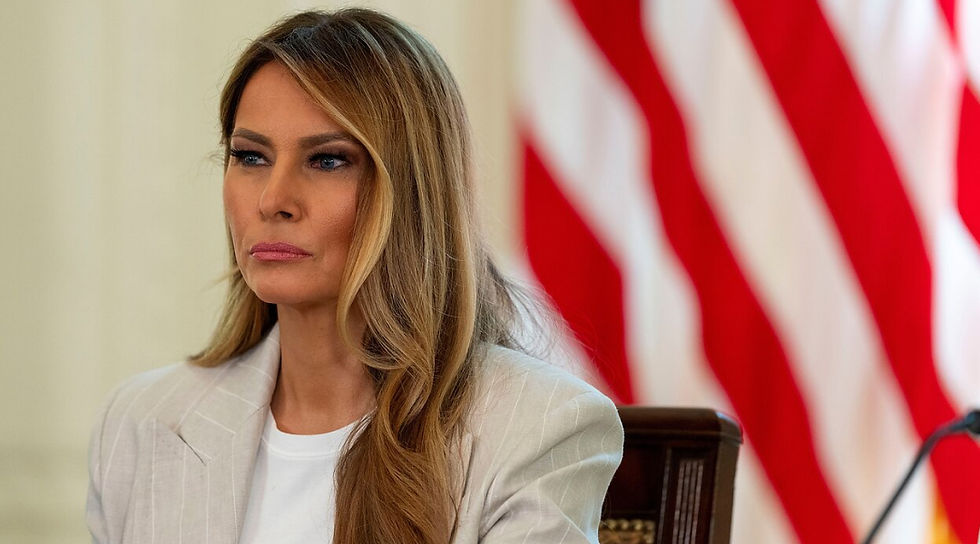
Melania Trump denied that she had approached him with such a request.
Think about what happened here. The head of a state whose enterprise appears in international documents as a participant in the removal of Ukrainian children uses the topic of these children as an argument against Kyiv. And receives the lifting of sanctions for it.
Now for what you most likely did not know.
The report in which "Belaruskali" is named as a participant in transporting the children came about thanks to American money. The programme was called Conflict Observatory. It was launched by the US State Department in 2022.
And in March 2025, the American administration terminated its funding. The State Department confirmed that the contract had been terminated. Senators from both parties wrote to Secretary of State Rubio demanding an explanation of the decision. The lab survived on private donations and handed its data over to Europol and Ukrainian partners.
We are not saying that one decision is directly linked to the other. But if you put it all together, you get an unpleasant picture: the instruments that helped search for these children and name the organizations they ended up with are not a priority in the current approach.
All right, you will say, maybe there is a big economic benefit? Let us look at the figures.
The first shipment of Belarusian potash to the US was thirty thousand tonnes. It was loaded on 15 September at the port of Bronka in St. Petersburg. In Russia. Last year's imports of potash fertilizers into America amounted to 13 million tonnes. Thirty thousand tonnes is a pittance.
Analysts cited by the Financial Times believe that Belarus will not be able to quickly increase supplies and compete with Canadian prices. Because of EU sanctions, the country cannot use the Lithuanian port of Klaipėda and transports fertilizers via Russia. This shipment has already been called a political gesture against the backdrop of trade frictions between the US and Canada.
The US gets an almost symbolic volume. And "Belaruskali" gets normalization, legitimacy and the return of the enterprise to normal business. Before the sanctions, "Belaruskali" shipped 10-11 million tonnes a year to 107 countries. It is the regime's main source of foreign currency.
And one small detail that would make you laugh if it were not so sad. In December 2024, "Belaruskali" filed a claim against Lithuania in international arbitration and demanded compensation for the termination of transit. An enterprise whose premises are tied to the story of the removal of Ukrainian children is demanding money from an EU country.
Now the most interesting part: Europe is doing exactly the opposite.
Instead of easing them, it has expanded the statement of reasons for the sanctions, directly adding responsibility for the illegal transfer of Ukrainian children. It has extended the entire sanctions regime against Lukashenko until the end of February 2027. Rybakov remains on the European list.
It turns out that the same enterprise is, for Brussels, a participant in the transfer of children, and for Washington, after 21 October, an enterprise against which the US has no claims. And for the Lukashenko regime, it is a ready-made propaganda story: even the Americans see no problem in us. And propaganda also likes to say: "The US lifted the sanctions because the world is starving without Belarusian potash." This is an absolute myth. Let us look at the figures that reveal the real economic background of this deal.

After the closure of the Lithuanian border and the port of Klaipėda in 2022, "Belaruskali" did NOT stop. With the help of "Russian Railways" and Russian ports on the Baltic and in Murmansk, the regime brought exports back up to the pre-crisis level of 11 million tonnes a year!
So what was the problem? Why was Lukashenko so desperate to get the US to lift the sanctions?
The sanctions discount. Because of its "toxic" status on the US SDN list, "Belaruskali" was forced to sell potash to China, India and Brazil at a discount of $50-80 per tonne!
Payments. Banks around the world were afraid to process payments for Belarusian potash in dollars for fear of US secondary sanctions.
Logistics. Ship insurance and freight cost three times as much.
By removing "Belaruskali" and its director Andrei Rybakov from the SDN list, the US Treasury gave the Lukashenko regime a gift worth between 600 million and 1 billion dollars of net additional revenue per year!
Now the company can legally carry out transactions in dollars, insure ships without risk surcharges and remove the huge discounts for buyers in Asia and Latin America.
Where will this money go? To schools or hospitals? No. This money will go into the regime's so-called "parallel budget." Into payments to the security forces, the purchase of special equipment for dispersing citizens, the maintenance of military bases, constant military exercises, arms purchases, and the financing of the very camps where the identity of Ukrainian children is being erased.
Washington's decision strikes a blow at the entire system of international justice. It sends a clear and disgusting signal to all top managers of dictatorial regimes around the world: "Do not be afraid. You can hand over your plant's transport for the deportation of children. You can finance ideological indoctrination. You can serve as the dictator's wallet. The main thing is to wait until the situation in the US changes and you are struck off the lists."
But international law works differently. Under Article 8 of the Rome Statute of the ICC, the deportation of children from occupied territories is not subject to any statute of limitations.

The National Anti-Crisis Management has already sent two official communications to the Office of the Prosecutor of the ICC in The Hague. The Prosecutor General's Office of Lithuania is conducting an investigation under universal jurisdiction.
No political decisions in Washington can cancel the fact that the infrastructure of "Belaruskali" is directly implicated in crimes against humanity.
History does not forgive attempts to appease dictators at the expense of the values of law and human dignity.
Every tonne of Belarusian potash unblocked by today's American decisions is sprinkled with the tears of deported children and the suffering of thousands of Belarusian political prisoners.
The European Union is holding the line for now. Rybakov, Golovaty and "Belaruskali" itself must remain under absolute, airtight sanctions until the last Ukrainian child returns home and all political prisoners in Belarus are set free.


Comments