


Five-YearPath

Updated: Feb 23

From a reactive approach to a sustainable strategy for national reconciliation and Belarus’s European future
2021 — Foundation and crisis response: Building the organization with a primarily reactive approach to the crisis in Belarus.
2022 — Capacity building and adaptation: Strengthening core areas of work and adapting operations to the realities of Russia’s full-scale war against Ukraine.
2023 — Strategic consolidation (2023–2025): Development of a long-term strategy focused on sanctions measures, international justice mechanisms, and public-oriented media engagement.
2024 — Strategy implementation: Advancing the Belarusian situation before the International Criminal Court and achieving significant growth in media reach and impact.
2025 — Advancing national dialogue: Building on achieved results, transitioning toward the promotion of “national dialogue” concept. Achieving a significant increase in the effectiveness of sanctions measures.
International justice for Belarus
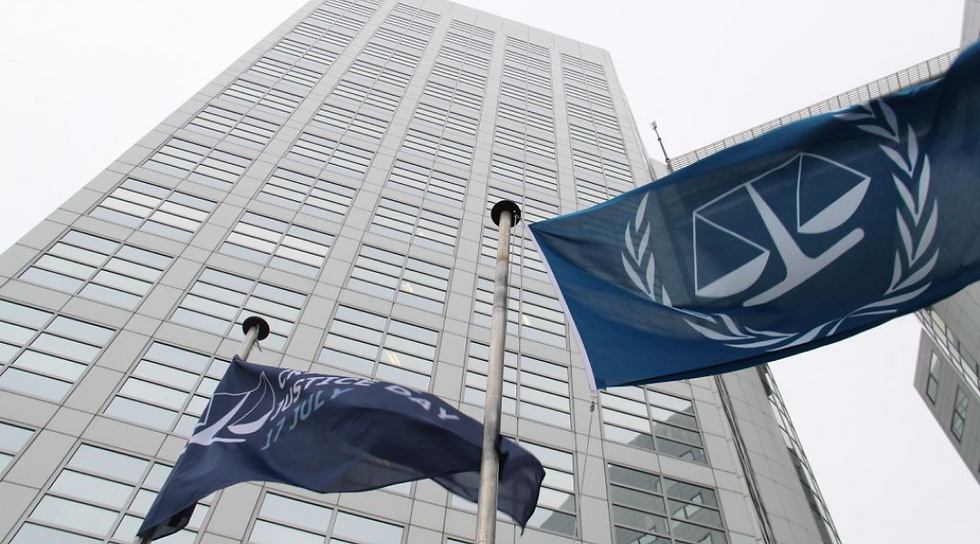
Amid the crisis in Belarus, marked by crimes against humanity and Russia’s aggression against Ukraine launched from Belarusian territory, NAM established a Legal Department in late 2022–early 2023 to focus on international criminal accountability issues.
Key objectives:
Build a systematic process for documenting international crimes
Use available accountability mechanisms to support efforts to hold the Lukashenka regime’s senior military and political leadership responsible for international crimes.
Achievements 2023

Belarusian context
International legal experts, including those associated with the NAM, have prepared the first comprehensive report on crimes against humanity in Belarus, published by the Law and Democracy Center “Justice Hub”.
Engaging with Lithuania's Ministry of Justice, Ministry of Foreign Affairs, and the Prosecutor General’s Office on the possibility of applying Article 14 of the Rome Statute to the “Belarus situation,” resulting in the initiation of relevant domestic procedures in Lithuania.
Participation in the Assembly of States Parties of the International Criminal Court (ICC).

Ukrainian context
Compilation of an archive documenting the unlawful mass transfer of Ukrainian children from Russian-occupied territories of Ukraine to Belarus.
Submission of the collected materials to the Office of the Prosecutor of the ICC through two communications under Article 15 of the Rome Statute (June and November)
Submission of the collected materials to the Security Service of Ukraine, the Prosecutor General’s Office, and the Office of the Ukrainian Ombudsman (May and December)
Achievements 2024

Belarusian context
Provision of materials and advocacy support to the Ministry of Justice of Lithuania in preparing the Article 14 referral of the “Belarus situation” to the Office of the Prosecutor of the ICC
On 30 September, the “Belarus situation” was officially referred to the Office of the Prosecutor of the ICC
Development of a concept for launching the OSCE Moscow Mechanism regarding forced expulsion of “disloyals”
Participation in the first-ever side event dedicated to the “Belarus situation” at the Assembly of States Parties of the ICC

Ukrainian context
Submission of materials on deportation of Ukrainian children to UN Special Rapporteurs and Commission of Inquiry on Ukraine
Development of wording for PACE and European Parliament resolutions on accountability
Achievements 2025

Belarusian context
Compilation of a document package submitted to the Office of the Prosecutor of the ICC
Submission of materials demonstrating state policy of deportation of “disloyal” Belarusians
Drafting materials for a potential case before the International Court of Justice

Ukrainian context
Draft wording ensuring tribunal jurisdiction over Belarus leadership for aggression
Submission of information on deportation of Ukrainian children within Lithuanian criminal case
Guiding principles of the long-term accountability strategy

Commitment to international accountability
Long-term engagement with ICC, ICJ, Tribunal for the Crime of Aggression
Adaptability to political uncertainty
Reliance on effective accountability mechanisms
Mobilization of stakeholders
Strategy within Belarus context
NAM expects the Office of the Prosecutor of the ICC to decide on opening a full investigation into the Belarus situation by the end of 2026. In case of a positive decision, NAM will implement the following three-fold strategy:
Strategic advocacy and coalition-building
Intensify bilateral, regional, and international advocacy
Build a coalition of States to join Lithuania’s referral to the ICC
Using State referrals to broaden ICC jurisdiction, reinforcing investigative effectiveness, preventing fragmentation, and supporting victim participation.
Operational cooperation with the Office of the Prosecutor of the ICC
Collect and submit relevant evidence
Reinforce the work of Belarusian and international civil society
Support the Office of the Prosecutor throughout investigations and proceedings
Outreach to affected communities
Engage the Belarusian diaspora in Poland, Lithuania, and beyond
Share information on the investigation and manage survivors’ expectations
Ensure inclusive participation of affected communities
Accountability before the ICJ
Сontinue targeted advocacy to identify a State willing to bring a case against Belarus for breaching a UN multilateral Convention
Conduct strategic bilateral and multilateral meetings with potential applicant States
Convene stakeholders, legal experts, civil society, and survivors in regional and international fora
Strategy within Ukrainian context
Keeping focus on contributing to international accountabilityof Belarusian political and military leadership for the crime of aggression against Ukraine
Appealing to accountability mechanism of the Tribunal for the Crime of Aggression Against Ukraine that has been already established but will become operational in 2029
Adhering to early preparation in collecting, analyse, and preservation of evidence
Further submission of consolidated evidence to relevant stakeholders and, once operational, to the Office of the Prosecutor of the Tribunal
Sanctions pressure

Sanctions as a tool of pressure
Sanctions are not merely a tool of accountability; they are one of the instruments to compel a change in policy—in our context, the regime’s internal repressive and external aggressive policies.
Sanctions in the recent history of Belarus have yielded tangible results. Lukashenko was forced to release political prisoners and undertake some liberalization of his domestic policies, as well as to address external issues that he had created for partners.
We work with both supranational and national sanctions. Supranational sanctions refer to those imposed by the European Union. National sanctions are prioritized in coordination with the United States, the United Kingdom, Canada, Poland, Ukraine, and several other countries.
Overall, between 2020 and 2025, a total of 14 packages of EU economic, personal, or mixed sanctions were adopted. The EU sanctions regulation was amended and supplemented 21 times.
The EU’s sanctioning framework on Belarus has existed since 2006 and has evolved over time. We can divide the sanctions into several stages. The first EU package was adopted on October 2, 2020, targeting 44 representatives of the regime. Later, Lukashenko and part of his inner circle were added to the list. The third package, in December 2020, for the first time targeted seven military-related enterprises and major companies associated with the regime. The goal was to pressure the regime to end repressions and begin dialogue.

After the forced landing of the Ryanair plane in June 2021, the EU introduced a fourth package. In addition to expanding personal sanctions to 78 individuals, the first sectoral measures were introduced: restrictions on dual-use goods, potash, oil products, financial transactions, and securities. At the same time, eight additional legal entities were sanctioned, including BelAZ and MAZ. The United States, the United Kingdom, and Canada simultaneously introduced restrictive measures.

Subsequent packages expanded both personal and sectoral sanctions. In December 2021, the fifth package was adopted following the onset of the migration crisis, targeting the border command, airlines, travel agencies, and large state-owned enterprises. With the start of the war in Ukraine in 2022, the EU strengthened measures: Belarusian banks were disconnected from SWIFT, the import of euros was banned, cargo transit restricted, and trade restrictions expanded on oil, potash, timber, metals, and dual-use technologies.

In 2023, a period began for harmonizing trade sanctions against the Lukashenko regime and Russia to close the “loophole” that allowed the Kremlin to bypass restrictions imposed on Russia due to its aggression against Ukraine via Belarus at minimal cost.
This process began in August 2023, when the EU adopted a package of sectoral economic sanctions. The EU prohibited the export of certain goods and technologies contributing to the country’s military-technical development. New personal sanctions were also imposed, affecting 38 individuals, including security officials and propagandists, as well as three Belarusian companies: Belneftekhim, BMZ Holding Company (management company of BMK), and Minsk Electrical Engineering Plant named after V. I. Kozlov.
The next step was the package of July 1, 2024, which further expanded the harmonization of trade restrictions. By early 2025, nearly 90% of trade sanctions between the Lukashenko regime and Russia were harmonized. At the same time, the EU adopted several packages of personal sanctions against judges, officials, and propagandists of the regime—in August and December 2024. The last package of EU personal sanctions was adopted in March 2025.
Over the past two years, we have regularly submitted proposals for improving sanctions and expanding sanction lists both to EU supranational bodies and to the governments of EU member states, as well as to the governments of other democratic countries (USA, UK, Canada, Ukraine, etc.). These proposals were sent to the EU’s authorized bodies (both the European Commission and the Directorate-General for External Relations), the UK, USA, Canada, all EU countries, Ukraine, and others—over 100 letters in total.
These proposals were communicated in writing, and our joint positions were presented during in-person meetings and visits, including during the Belarus–USA Strategic Dialogue, the Belarus–EU Advisory Group, meetings with the EU Special Representative on Sanctions David O’Sullivan, and with ambassadors and representatives of the foreign ministries of the EU, USA, Canada, Ukraine, etc.
We formulated a position on the need to harmonize sanctions regarding Russia and Belarus, which was sent to EU leadership, as well as to all foreign ministers of EU member states and their representatives in Brussels. This position was also communicated to the US Secretary of State.
Sanctions for political prisoners and EU personal sanctions were also introduced based on our proposals in August 2023 and 2024, and in March 2025. Dozens of judges (August 2023—19 judges; August 2024—13 judges; March 2025—another 9 judges), heads of the regime’s prisons (9 in August 2023; 5 in August 2024), and propagandists (4 in August 2023—Gigin, Lebedeva, Pustovoy—and 4 in August 2024, including Akulovich and Zhuk) were added to the lists. We prepared these proposals.

Based on our proposals, part of the regime’s Central Election Commission leadership (7 individuals) was sanctioned by the EU in March 2025. In March 2025, Oleg Romanov, a prominent supporter of the “Russian World” ideology in Belarus and former leader of the “Belaya Rus” party, was also sanctioned. To date, the EU has sanctioned 314 individuals and 58 legal entities.
During a meeting with EU Special Representative on Sanctions David O’Sullivan in Brussels on December 11, 2023, we raised the issue of evasion of existing sanctions, including those related to Russia via Belarusian banks and other banks in third countries, as well as through the Bank of Russia’s Financial Messaging System (SPFS). Mr. O’Sullivan expressed interest in this aspect of sanction evasion, and on January 11, 2024, we sent him analytical materials on this payment system, its role in sanction evasion, and a list of banks using it in Belarus. We also communicated our position on this issue to our European partners in Germany, France, Poland, and other EU countries.
As a result, in June 2024, the Russian SWIFT analogue, SPFS, was included under EU anti-Russian sanctions. For its use in evading sanctions, Belgazprombank and Bank BelVEB were included under European restrictions in February 2025.
Besides the EU, from 2020 to 2024, the USA imposed strict personal, financial, and sectoral sanctions against the Lukashenko regime: officials, banks, petrochemical and defense enterprises, the dictator’s private aircraft, and other key sectors were blocked. The US SDN list currently includes 105 legal entities and over 100 individuals. After the war in Ukraine began, measures were intensified, with large banks, security structures, and hundreds of goods and companies added to export controls.
We also ensured that all of Lukashenko’s aircraft were sanctioned. Formally state-owned, they are used personally by Lukashenko. His aircraft were added to the US SDN list (the second-to-last was sanctioned in August 2024, and the final one—plane No. 1—on August 9, 2024).
Additional sanctions were adopted by allies based on our proposals: Canada targeted judges, banks, military, and defense enterprises; the UK targeted banks and certain economic sectors.
A key priority for us was sanctions related to the illegal transfer of Ukrainian children. Based on collected evidence of specific individuals’ involvement, the EU, USA, and Canada imposed sanctions on Aleksey Talay (February 23, 2024—EU) and his foundation, BRSM and its leader Alexander Lukyanov (14th Russian sanctions package), and the State Secretary of the Union State of Belarus and Russia Dmitry Mezentsev (EU—June 2024)—all implicated in the war crime of illegally transferring Ukrainian children.
Besides the USA and EU, 18 other countries, including the UK, Canada, Japan, and Australia, imposed sanctions. Nearly all export sectors, over 200 individuals, and major state enterprises were targeted. The World Bank and EBRD also suspended financing for Belarus.
Overall, for the EU, USA, Canada, and Ukraine, we proposed personal sanctions against 360 individuals, including senior military-political leaders of the Lukashenko regime who facilitated Russia’s aggression against Ukraine (21), judges issuing illegal sentences (102), heads of colonies and prisons holding political prisoners (17), propagandists inciting interethnic hostility and spreading disinformation (44), members of the so-called National Assembly passing discriminatory and unlawful legislation (172), sports officials persecuting athletes (36), and others.
We also prepared a list with justification for 13 Belarusian defense enterprises, 19 banks, and major propaganda outlets (ONT, STV, Belarus Segodnya publishing house), which was sent to the EU and the vast majority of EU, US, UK, Canada, and other countries.
We prepared and proposed sanctions to our partners against officials and institutions of the Union State, which act as instruments of Russia’s imperial policy toward Belarus. For the migration crisis, we developed sanctions proposals targeting the leadership of the Border Committee and restricting supplies of goods produced by political prisoners.
Analytical notes were prepared analyzing the effects of current sanctions and proposals with minimal side effects.
We do not idealize or exaggerate the sanctions tool, but it is a real, substantial, and serious factor affecting the regime, which works and should work to compel Lukashenko to partially change his policies.

Our priority in sanctions policy is to continue this work until Lukashenko changes his internal repressive and external aggressive policies. Our main goal is an independent, free, democratic Belarus, without political prisoners or political repression.
We will continue our work to maximize sanctions effectiveness and minimize side effects. Our future plans include:
continuing preparation of justifications for including enterprise leaders, judges, propagandists, and so-called “deputies” in sanction lists;
advocating for the maintenance and further harmonization of existing restrictions to promote political change in Belarus and prevent the regime from supporting Russia’s aggression against Ukraine;
preparing video materials and explanatory texts about judges, propagandists, individuals, and organizations supporting repression in Belarus and aggression in Ukraine, as well as the harm of counter-sanctions to Belarusian society;
monitoring the effectiveness of implemented measures and regularly submitting proposals to adjust sanctions.
Media engagement
Scale-up

We have consistently expanded the social media presence of Pavel Latushka and the National Anti-Crisis Management (NAM), adding the social media platforms of The Faction “Latushka’s Team and Movement for Freedom,” thereby increasing the number of channels from 11 to 21.
Sustainability
2021 — The figures were recorded inconsistently due to the lack of systematic analytics of media performance
2022 — 136M
2023 — 186M
2024 — 162M
2025 — 177M
Despite the overall trend of declining audience engagement and reduced viewership, our social media platforms continue to remain popular and to develop further.
Focus on Belarus
Priority area: ensuring sustainable reach and engagement with audiences inside belarus as a key vector of our activities.
Statistics for 2025:
Total views: 17.3M with 67.7% from Belarus
Total views: 28.8M around 80% from Belarus
Total views: 10.2M more than 50% from Belarus
International influence
Our voice on the global stage:
Interviews with leading international media outlets:
BBC, Le Monde, Gazeta Wyborcza, Reuters, Der Spiegel, Associated Press, Euronews
X (Twitter): Over 5.5 million views per year
Two dedicated channels for Polish audiences: YouTube and TikTok
Selected Outputs

Campaigns
Campaign “Putin’s Puppet, Alexander Lukashenko, Must Be Punished”
Campaign “Belarus — an Occupied Country”
Campaign “Not a Cent for War”

Conferences and Round Tables
Conference “Universal Jurisdiction Mechanisms: General Approaches and Application in the Republic of Poland”
Round table “Paths Out of the Political Crisis in Belarus: Lessons from the Polish Round Table”
Round table “Polish-Belarusian Dialogue on Solidarity: Historical Traditions and Contemporary Challenges of Polish Migration Policy”
Film
Feature-length documentary film “The Belarusian Trial”
An original documentary produced by the National Anti-Crisis Management.
New formats
“The Regime’s Shapeshifters” — a video investigation series exposing the crimes of Aliaksandr Lukashenko and his inner circle across various sectors.
Shapeshifters in Robes.” Film One
The Central Election Circus: Lukashenko Gets Another Term
“Belarus in the Grip of War” — a three-part documentary exploring the systematic preparations by the regime of Aliaksandr Lukashenko for potential entry into the war on Russia’s side.
Entering the Kremlin’s Orbit:
Militarization and Integration
The Transformation of Society: Preparing for War at Every Level
The Price of Silence: Preventing a Catastrophe
NAM Analytical Center
The uniqueness of NAM's expertise lies in the fact that we employ specialists who have extensive experience working within the public administration system, including various ministries and departments of Belarus, as well as local governments. This allows them to possess insider knowledge of the regime system.
We have prepared the following reports:
“The Role of the Lukashenko Regime and the Union State in the Program for the Illegal Deportation and Re-education of Children from Ukraine.”
“The Union State as a Cover Instrument for Russia's Imperial Policy.” (link to the document)
“Systemic Discrimination, Human Rights Violations, and Political Repression by the Lukashenko Regime Against Belarusian Citizens Living Abroad and Ways to Overcome it.”
“Sanctions Pressure on the Lukashenko Regime (2020-2023)“ (link to the document)
Analytical Report "Systematic Preparation by the Lukashenko Regime for Possible Entry into the War on Russia’s Side and Recommendations for Preventing This Scenario" (link to the document)
Joint report of BELPOL and the National Anti-Crisis Management “Children without a future: the militarization of childhood in Belarus” (link to the document)
The regime’s reaction

How the Regime Reacts: Designation of Pages as “Extremist,” Blockades, and Shadow Restrictions
Examples (over the past year):
YouTube channel repeatedly added to the list of extremist materials;
Facebook page twice designated as “extremist”;
Telegram channel of the faction in the Coordination Council “Team Latushka & Movement for Freedom” blocked
Availability of the TikTok channel in Belarus has been temporarily blocked.
Why the regime reacts: They see a threat in the truth and an alternative perspective.
Conclusion: The harder they fight us, the clearer it becomes: we are doing the right thing.
Future
We plan to further strengthen and expand our media operations. A key priority is increasing our reach among Belarusians inside Belarus by at least 5%, despite the highly restrictive and repressive information environment.
We will invest in new formats and forms of engagement to better reach and involve our audience. This includes the production of short documentary-style videos and films exposing regime propaganda, documenting human rights violations, and highlighting Aliaksandr Lukashenko’s actions aimed at preparing Belarus for participation in war.
Through these efforts, we aim to deepen audience engagement, strengthen resilience against disinformation, and reinforce understanding of democratic change inside Belarus and internationally.
Sustainable strategy

Lobbying for the legalisation of Belarusians in forced exile(visas, identity documents, access to education, pensions, bank accounts, access to professions, and related issues)
Support for cultural and social initiatives
The National Anti-Crisis Management (NAM) as a driving force of the institutionalisation of Belarusian democratic forces
Vision of the Future Belarus: reforms, talent pool for a future democratic Belarus, and international partners
Working environment and risks
Family members and close relatives of all NAM participants are subjected to persecution by the Lukashenko regime
The majority of team members face in absentia criminal cases and regular threats
Multiple criminal investigations in Poland have been initiated related to:
attempted assassination of Pavel Latushka
attempted recruitment and attacks against NAM members
A continuous disinformation and discreditation campaign is conducted against the team
Despite these conditions, all NAM members work on a full-time, professional basis
NAM activities are not voluntary side engagement, but a mission grounded in responsibility and belief in democratic change
Strategic path forward


Members of the NAM team prepare:
Draft decisions of the Cabinet and oversee their implementation;
Draft resolutions of the Coordination Council and manage their execution;
Amendments to relevant resolutions and additions to documents adopted by the PACE and the Congress of Local and Regional Authorities of the Council of Europe.
The National Anti-Crisis Management is a unique expert team that makes a significant contribution to the activities of Belarusian democratic forces.
We don’t just talk — we take action.
Structure

The structure of the democratic forces is built on the principles of trust, transparency, and mutual accountability. Sviatlana Tsikhanouskaya, as the national leader, appoints representatives to the Cabinet and coordinates these appointments with the Coordination Council. Cabinet representatives carry out their duties through sectoral representations. The Coordination Council is elected through direct elections based on a proportional system. It elects a speaker from among its members and establishes commissions.


Comments