


Lukashenko has made a mistake

Pavel Latushka on how Lukashenko has "tied himself" to Russia and what problems this creates for the country's future
The economic, military and social foundation of the Russian Federation is bursting at the seams under the weight of a protracted war. And along with it, the prop that holds up the Lukashenko regime is collapsing.
Look at the facts you will not hear from propaganda. Since the beginning of this year, Russian citizens have withdrawn an incredible 2.4 trillion roubles from the banking system in cash. People do not read dry economic reports: they sense trouble approaching and vote with their own savings, pulling deposits out of the largest systemically important banks. Capital is fleeing abroad: in 2026, Russian citizens sent more than 600 billion roubles to the accounts of foreign brokers alone, more than in the previous seven years combined.
When money flees a country and citizens hide cash under their pillows, it is the first sign that trust in the state has collapsed. But this is only the tip of the iceberg. Russia's crisis will inevitably engulf Belarus as well. Our duty is to soberly assess the scale of what is happening and prepare to exit the danger zone.
Let us look at the figures and facts recorded by independent analysts and economic services. Russia's federal budget deficit has exceeded 6.46 trillion roubles, reaching 2.8% of GDP. Oil and gas revenues have plummeted by almost 23%. Of the 13 trillion roubles in the National Wealth Fund, only 3.5 trillion remain in liquid funds. When the leadership of the Central Bank and the Ministry of Finance tried to explain that the budget could not withstand military spending, Putin ordered cuts to civilian expenditure items.
The financial famine is aggravated by the systematic destruction of critical infrastructure. As a result of drone attacks, more than 30% of actual primary oil refining capacity has been knocked out. The result is a fuel crisis: restrictions on petrol sales have been introduced in 58 regions. More than a million square metres of warehouse space have been destroyed, and the logistics of the largest online marketplaces have been paralysed.
The key agricultural sector has also been immobilised. Grain exports, which brought in 15 billion dollars in foreign currency revenue, are effectively blocked. The grain terminals in the port of Novorossiysk have stopped, the complex in Taman has ceased operations, and restrictions in the Kerch Strait have blocked the ports of the Sea of Azov. Grain market experts and specialised publications state that shipments through the Azov-Black Sea basin have come to a standstill. There is simply no one to sell the 140-million-tonne harvest to. Domestic wheat prices have fallen to 12,000 roubles per tonne, and farmers have neither the funds nor accessible loans even to carry out winter sowing.
But even more terrible is the price society pays on the battlefield. According to estimates by international research centres, total losses of the Russian army have reached 1.4 million people, with monthly losses of about 30,000 servicemen. With a loss ratio of 8 to 1, the aggressor's war machine has still not achieved operational success. Even leading economists of state corporations, such as the former chief economist of VEB.RF, Andrei Klepach, openly admit that Russia is losing the technological and economic competition, and that wars of attrition are not won. The economist was immediately fired for these words, but the truth cannot be hidden behind personnel decisions.
Russian society is demoralised. According to VTsIOM and the Levada Center, — such a level of hopelessness was recorded only before the collapse of the USSR in 1991. The happiness index has fallen to a 16-year low, 67% of citizens are demanding peace negotiations, and at checkpoints such as Verkhny Lars, queues of 20,000 people a day trying to avoid a new wave of mobilisation are once again being recorded.
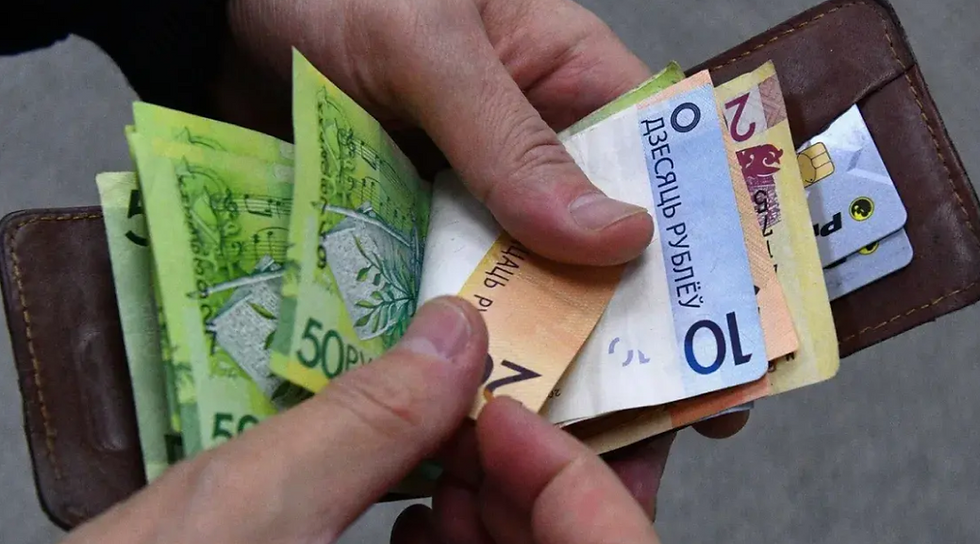
What does all this mean for Belarus? The Lukashenko regime has blindly tied our country to a tottering Russian colossus. More than two-thirds of our exports depend on the Russian market, and a quarter of the banking system's assets are controlled by Russian capital. When purchasing power falls in Russia, Belarusian enterprises end up with warehouses full of products that no one can buy. First-quarter results already showed a decline in Belarus's GDP. Citizens' incomes are falling, while price tags in shops are rising. The cost of our basic food basket has already practically caught up with that of our European neighbours, where, let me remind you, salaries are many times higher.
For decades, Lukashenko traded Belarus's sovereignty in exchange for oil and gas subsidies and loans. Today, Moscow has no money for its own regions, agriculture and social payments. To plug the hole in its budget, the Kremlin will not subsidise the Belarusian economy, but will squeeze the last resources out of our country, pushing out local businesses and seizing what remains of the Belarusian market.
The socio-economic crisis in Russia and the depletion of its resources will inevitably deprive Lukashenko of his security prop. The Kremlin will not have enough resources to rescue the illegitimate government in Minsk. The collapse of an empire is always a historic window of opportunity for the peoples it tried to subjugate. Belarus's historic chance is gradually returning. The crisis in Russia is the inevitable end of the model of lawlessness and dependence into which we have been driven for thirty years. We must not allow the Lukashenko regime to drag Belarus down with it.
Our tasks today are clear and practical:
Do not take part in someone else's agony. Not a single Belarusian soldier should be sent to someone else's war.
Economic preparation. Belarusian businesses and company directors need to start preparing now for the economy's turn towards Europe.
Civic self-organisation. We must strengthen horizontal ties and support each other inside the country and abroad.
The dictatorship's time is gradually running out, along with melting reserves and the outflow of trillions from the Russian financial system. Our goal is an independent, European, democratic Belarus, where the Belarusian people are the masters. Be courageous, stay united and take care of each other. Zhyve Belarus!

Comments