


The Price of Someone Else's War: How the Alliance with the Kremlin Is Bleeding Belarus Dry


For years, propaganda hammered the same myth into Belarusians' heads
This is the myth that Russia is our main sponsor, ally, and savior. Supposedly, without the Kremlin the Belarusian economy would collapse, factories would shut down, and people would freeze. We were told that surrendering sovereignty was merely a modest price for cheap gas, endless loans, and a guaranteed market. But let's look at the reality of the summer of 2026.
Today this myth has finally fallen apart. Selling out sovereignty has not brought Belarus wealth. It has brought isolation, toxic sanctions, military threat, and… plain and simple swindling. The Lukashenko regime didn't just drag us into someone else's war of aggression — it managed to do so on terms where Belarus pays for everything and gets nothing but empty promises in return.
Falling under harsh European or American sanctions for contracts with the military plants of an aggressor state is, in itself, a crime against our country's future. But there's a cynical rule in business: high risk should be compensated by high profit.
And what do you call a situation where you incur every possible international sanction, lose European markets, end up isolated, but don't get paid by the partner you did it all for?
That's not called a "strategic partnership." That's called complete, absolute being a loser.
And dozens of Belarusian enterprises now find themselves in this humiliating loser status. Our industrial giants were assured: "Russia's military-industrial complex is running at full capacity, there are mountains of gold there, an endless stream of money!" And what was the result? In the end, that money ran out. The systemic economic crisis in Russia, compounded by the collapse in the fuel sector, has now reached Russia's "defense industry" too.
Look at the courts. For the first time in history, Belarusian enterprises — both state and private — have started massively filing lawsuits in Russian arbitration courts against the "elite" of Russia's military-industrial complex. If last year conflicts could still be smoothed over "amicably" — when the sums were relatively small and giants like Rostec paid their bills — in 2026 the dam broke.

The flagship of Belarusian optics, the enterprise "Peleng," is now forced to sue the Saratov Aggregate Plant over a debt of nearly 1 million US dollars. And this plant is part of the "High-Precision Systems" holding of the state corporation Rostec, and produces the vaunted "Khrizantema-S" anti-tank systems.
The leader of our military-industrial complex, "Volatavto," a manufacturer of chassis for electronic warfare systems and missile complexes, filed a lawsuit in June of this year against "Motovilikha Plants" — Russia's only full-cycle artillery and "Grad" rocket launcher manufacturer. The claim amount is again around 1 million dollars. The first hearing is already scheduled for August.
Private business has also been caught under this steamroller. The Smolensk-based company "Avtotekhinmash," a major distributor of BelAZ equipment, is suing the "Ilyushin Aviation Complex" (the very same UAC holding within Rostec, manufacturer of the Il-22 flying command posts).
Belarusian enterprises supplied products, risking their reputations and incurring lifelong sanctions, while Russian military giants simply shrug and don't pay. A Belarusian worker finishes his shift, but there's no money to pay his wages, because the "ally" turned out to be bankrupt.
Why don't Russian defense giants pay our factories? Is this just a coincidence? Not at all. The answer lies in the catastrophic state of Russia's financial system.
Just recently, Russia's Ministry of Finance announced it is temporarily halting the placement of federal loan bonds (OFZ). The official wording sounds laughable: "in order to help stabilize the market situation." But we all understand what's really happening when officials start talking about "stabilization."
Simply put, no one is lending Russia money anymore. Even Russia's own banks refuse to buy into this gamble. Last week an OFZ auction was cancelled due to a complete absence of buyers. And that's already the third failed auction since the start of summer! Out of the 1.5 trillion rubles planned for the third quarter, Russia's Finance Ministry managed to scrape together a symbolic 10 billion. Russian authorities have built a classic financial pyramid scheme.
In 2023, they borrowed 2.8 trillion rubles through OFZ bonds.
In 2024 — 4.4 trillion.
In 2025 — already 7.2 trillion!
For 2026 they had planned to pull another 6.5 trillion out of the market.
But the financial bubble has burst. Bond yields have soared to an insane 13–17%. Today, servicing the government debt eats up 9% of all of Russia's budget expenditures. Have you thought about that figure? Russia spends more on interest payments on its debts than on the entirety of its healthcare and education combined!
The hole in Russia's budget will soon reach 6 trillion rubles, and expenditures were quietly increased by another trillion in recent days. Where is the money for the war supposed to come from? The National Wealth Fund has only 3.6 trillion rubles in liquid assets left. That's not even enough to cover the current deficit, let alone the need to repay 3 trillion in old debts.
What way out does the Kremlin have? A well-known historical way out — internal default. Robbing its own banks and freezing payments, as it already did in August 1998. And only a few weeks remain until a new potential default. The alternative is simply printing unbacked rubles. But that's a different problem — inflation. And it is to this sinking financial pyramid that Lukashenko has tied the Belarusian economy for good!
What does all this mean for the citizens of Belarus? Finance Minister Uladzislau Tatarynovich proudly talks of a transition to a "deficit-free budget." But at what cost? In 2025, the deficit of the republican budget was 4.5 billion rubles (about 1.6% of GDP). At the same time, the regime took out another 1.2 billion dollars in loans from Russia, finally hooking the country onto the needle of credit dependency.
But now the credit source has dried up. There's no money in Moscow. And how does Lukashenko respond? In the 21st century, with a nuclear power plant in the country, Lukashenko calls for switching heating in Belarus to… pellets, firewood, and biofuel! And proposes leaving natural gas as a mere "reserve source"! A country that was promised to become a "technological hub" is, through the regime's efforts, being thrown back into the Middle Ages — to stoking furnaces with wood and sawdust. Because gas has to be paid for, and soon there will be nothing to pay with!
But that's not all. The moment the slightest friction arises in relations with the Kremlin, Russia doesn't hesitate to strike at Belarus's most painful spot — our industry and agriculture. Rosselkhoznadzor is once again massively imposing restrictions and special laboratory controls on Belarusian meat and dairy products this year. In 2026, restrictions were imposed on 11 Belarusian enterprises, and another 15 were placed under enhanced monitoring. Rosselkhoznadzor has never really been about veterinary matters — it's a tool of economic blackmail that Russia uses to protect its own producers and pressure Minsk.
Belarus finds itself in a vicious circle:
Dependence on the Russian market has cost it trade with the European Union.
Sanctions have blocked our banking sector and cut off access to modern technology, equipment, and logistics chains.
And the Russian market itself is now deflating, refusing to pay its bills, and strangling Belarusian exports with duties and barriers.
But the most terrifying thing isn't the economic losses. The most terrifying thing is what the regime is turning our land into. Belarus has been turned into a military staging ground for the Kremlin. Our infrastructure has been placed at the disposal of a foreign army, provocative military exercises are being held on our territory, and foreign military facilities are being deployed. Just recently, in June 2026, Lukashenko signed a law ratifying yet another protocol to the Agreement on Military-Technical Cooperation. In July, Russia ratified this document as well. They have made the procedure for mutual military deliveries and procurement even simpler.
Specifically, the list of Belarusian enterprises and organizations entitled to directly participate in military-technical cooperation with the Russian side is being expanded. This allows more factory and research sites to cooperate without complex intermediary schemes. The procedure for drawing up contract documentation has also been streamlined and sped up. The mechanism for approving and forming lists of military-purpose products to be supplied has been revised, which shortens the time needed for agencies to review applications. Cooperation in research and development work is being simplified. Time spent on administrative procedures for supplying the security agencies of the Union State with equipment, components, and ammunition is being reduced.
Thus, Belarusian factories are being turned into a free repair shop for Russian military equipment, and Belarus itself into a direct participant in the regional military confrontation.
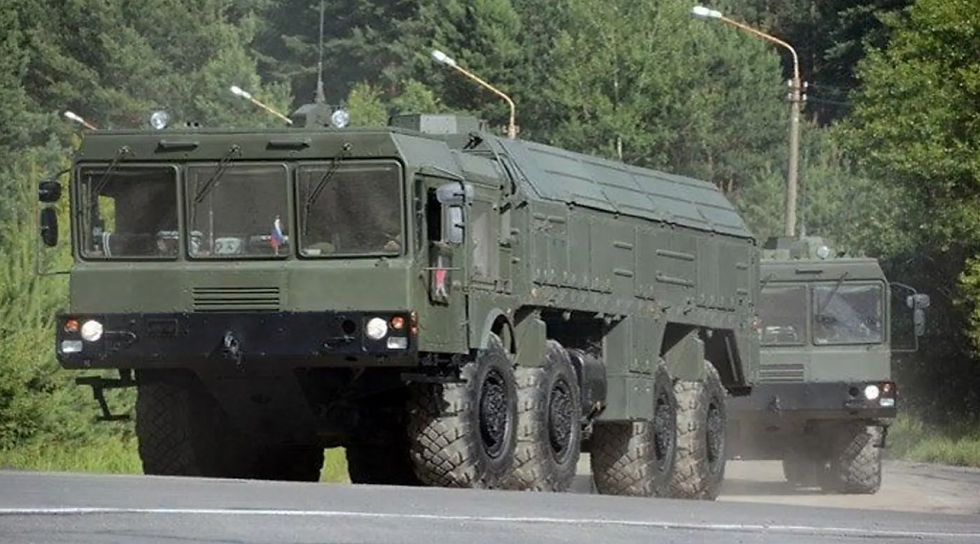
Look at the map. We've ended up in complete isolation from our neighbors — Poland, Lithuania, Latvia, Ukraine. We are on the brink of direct involvement in a military conflict with the NATO bloc. And for what? So that Kremlin generals can wage their senseless war for a few more months, all while not paying Belarusian factories for the equipment supplied?
For a long time we were told there was no alternative to an alliance with the Kremlin. We were told that "friendship with Russia" was a guarantee of stability. Today we see the price of this "stabilization":
It's the default that the ally's economy is hurtling toward;
It's millions in unpaid debts owed to our enterprises;
It's the switch from gas to firewood and pellets;
It's the constant fear of war and the complete loss of international standing.
Belarus should not be held hostage to someone else's imperial adventure. We don't need war. We don't need someone else's debts and someone else's defaults. A Belarusian worker should not be working for free for a foreign country's army! Not working for an army waging a war of aggression against our neighbor and a hybrid war against our other neighbors. Our path is the restoration of Belarus's state sovereignty.
We must immediately withdraw from this military adventure, revoke all the protocols turning us into a staging ground, and declare strict neutrality.
We must diversify our economy, regain European and global markets by lifting sanctions through a return to democratic norms and the release of all political prisoners.
We must build pragmatic, equal, and mutually beneficial relations with all our neighbors — both West and East — rather than serve as vassals of a bankrupt empire.
Belarus deserves to be a modern, prosperous, secure European state.


Comments